
Introduction: From Vision to Reality
In Post 1: The ERP Awakening, the journey started with the promise of moving from static records to actionable intelligence. That vision is inspiring, but the real test comes on Day 1—when the system meets the real world. This post explores what it takes to move from vision to execution, focusing on the practical data challenges and the first steps in implementing GenAI in an enterprise context.
Context: The Demo Room vs. The Real World
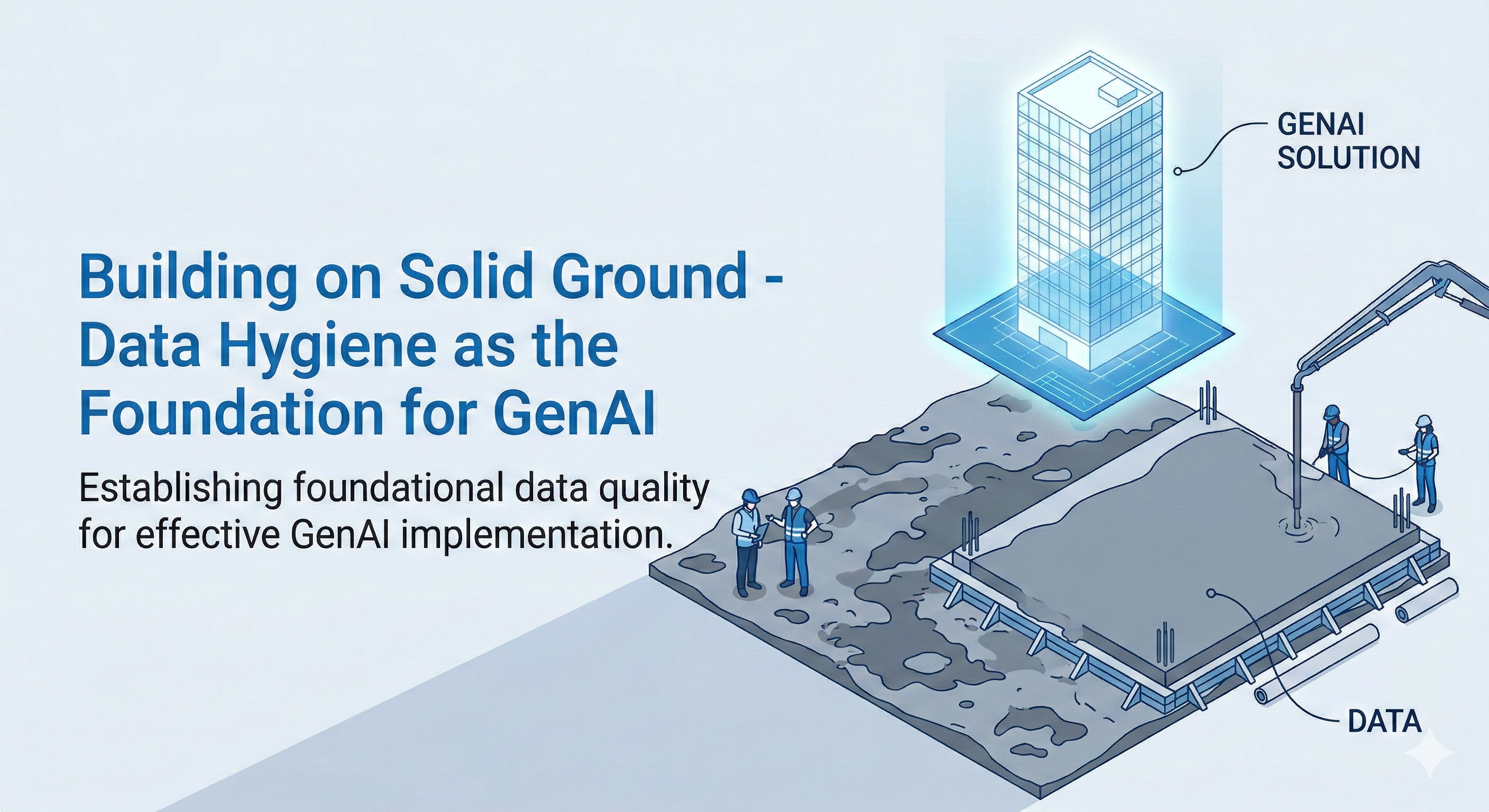
The journey often starts in a demo room. The screen glows, the answers are instant, and the optimism is contagious. This is “Day 0”—the promise of transformation. But the real world is not a demo. When the system is switched on for actual business, the cracks start to show. Data is scattered, processes are inconsistent, and the system struggles to deliver the same clarity seen in the demo. The real work begins here, where vision meets reality.
Problem: Why Day 1 Hurts—The Data Challenge
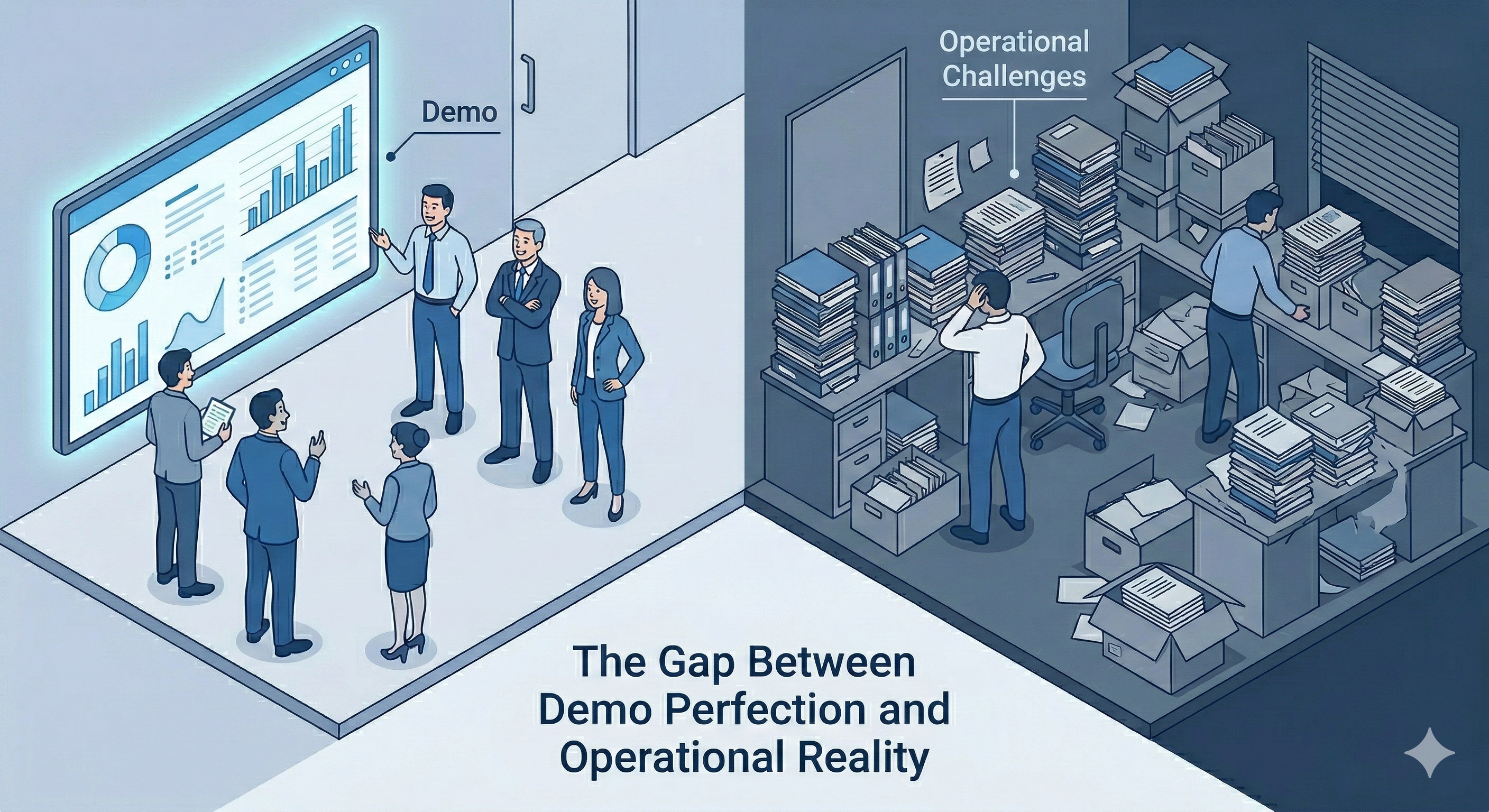
Most business systems were built to keep records, not to explain them. Over the years, notes piled up, customer names got duplicated, and old process documents stuck around. When GenAI is introduced, it tries to make sense of all this information. The result can be confusion: the system might give an answer that sounds right but is built on mismatched records or outdated information. The real problem isn’t just “messy” data—it’s that the data was never organized for analysis and learning.
Root Cause: Data Standardization and Readiness for GenAI
To get real answers, the data must be organized and standardized. This means:
- Merging duplicate records (e.g., “Acme Corp” and “Acme Corporation” become one)
- Retiring old process documents that no longer apply
- Making sure important details aren’t buried in free-text notes or scattered emails
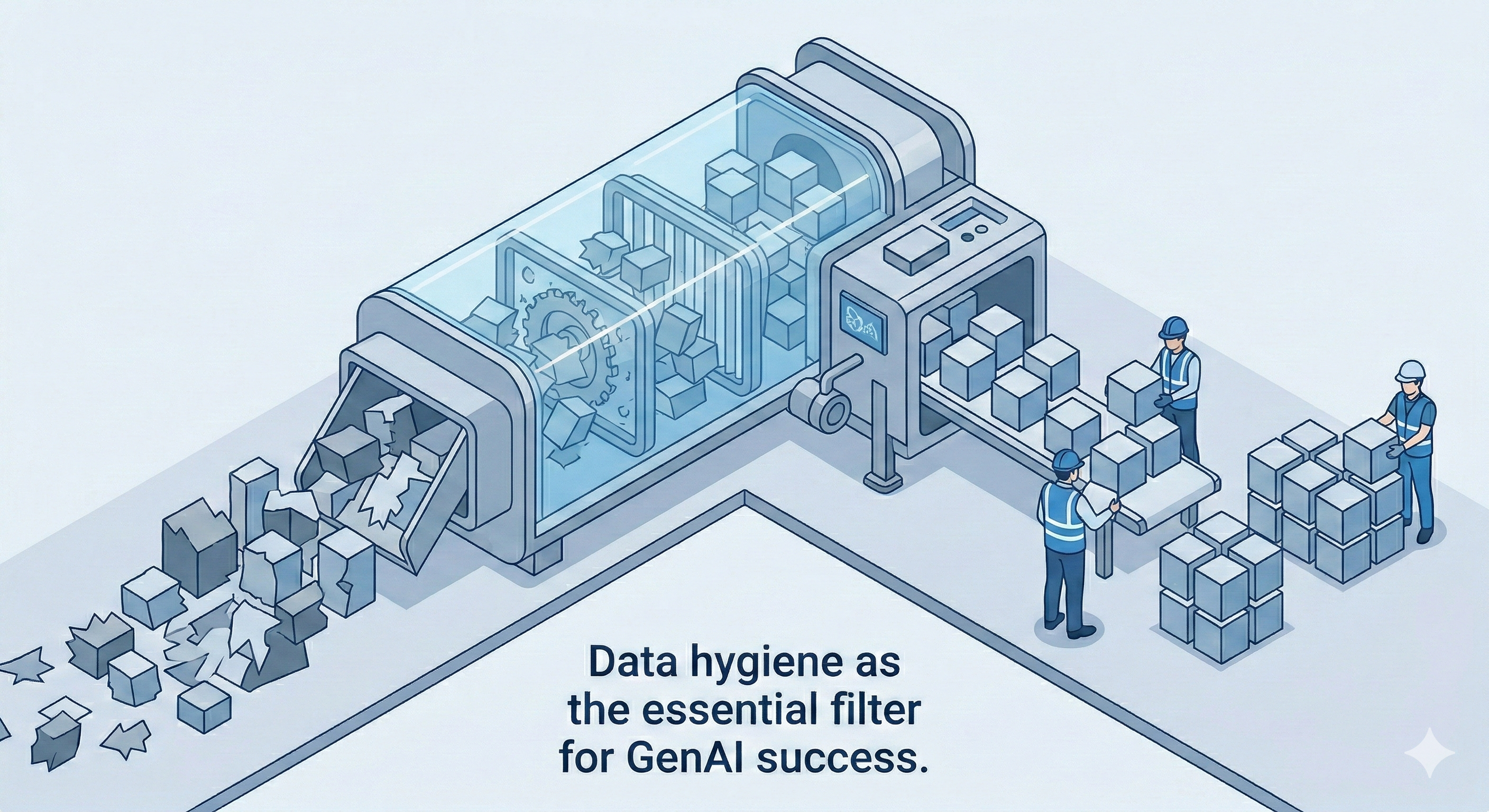
If these basics are skipped, GenAI will only repeat the confusion. Standardizing and aligning information is the first real step toward clarity and reliable automation.
Insight: What GenAI Actually Does with Enterprise Data
GenAI does not fix data inconsistencies; it surfaces and reflects them. When data is fragmented or non-standardized, GenAI will generate outputs that mirror these limitations. The system is only as good as the information it can access and understand. For GenAI to provide useful insights, the underlying data must be structured, current, and accessible.
Solution: Practical Approaches to GenAI Implementation
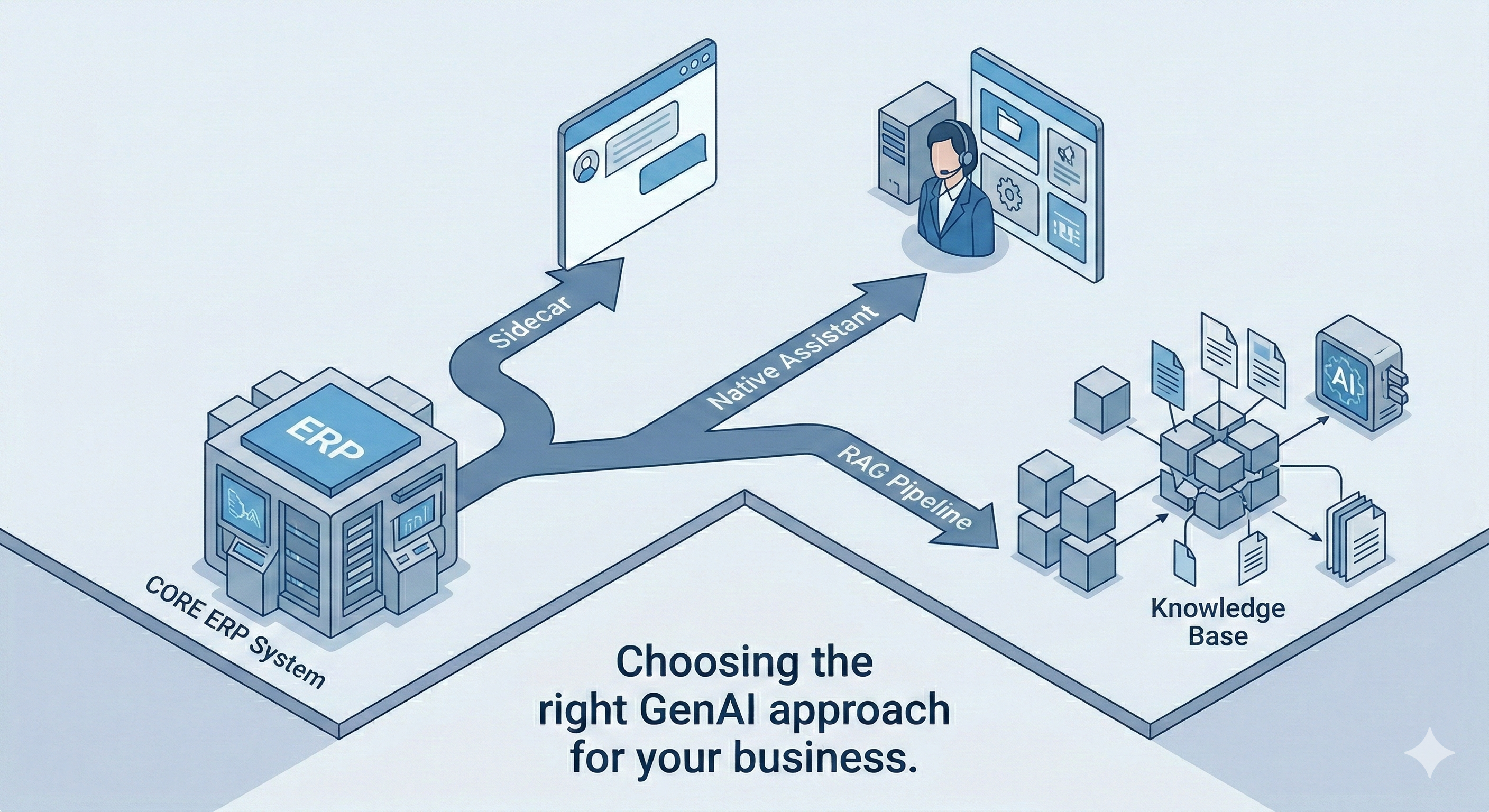
There are three practical ways to start implementing GenAI in an enterprise, each matching a stage of maturity:
Stage 1: The Chat Window (Sidecar)
- What it is: A simple chat box that sits on top of the system, letting users ask questions about business data. It is best for getting started quickly, answering simple questions, and testing the waters.
- Limits: Can only access surface-level information—no deep dives into complex business logic or historical context.
Stage 2: The Built-in Assistant (Platform Native)
- What it is: GenAI features built into the ERP platform, with access to more business context and data relationships. Answers are richer and more connected to the business.
- Best for: Organizations ready to move beyond basics, using the system’s built-in tools for deeper insights.
- Limits: Follows the platform’s rules—custom requests or unique business logic may be out of reach.
Stage 3: The Custom Knowledge Layer (RAG Pipeline)
- What it is: A custom solution that connects GenAI to all business data, documents, and records, enabling complex questions and advanced use cases.
- Best for: Enterprises with unique needs, lots of documents, or special business rules.
- Limits: Building and maintaining this solution takes time, effort, and ongoing care.
Implications: Trust, Transparency, and Change Management
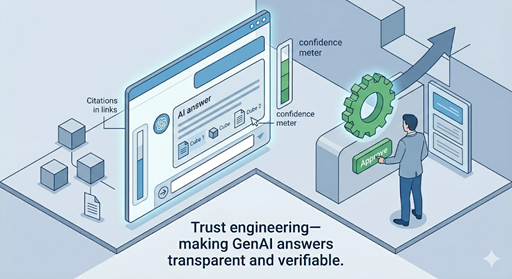
No matter which approach is chosen, trust is built by showing the work. Every answer should come with a source or reference. If the answer isn’t certain, the system should say so. And for important decisions, a human should always have the final say. GenAI works best when everyone can see how the answer was found and understands its limitations.
Conclusion: Day 1 is Just the Beginning
Moving from vision to reality is not a one-day project. The first step is organizing and standardizing the data, then choosing the right approach for GenAI, and finally connecting all the necessary information. The journey is about making the system work for the business—clear, transparent, and ready for the next question. Along the way, each step introduces new concepts and practical learning about how GenAI can be implemented and trusted in the enterprise.
How We Help Enterprises @ 1CloudHub
At 1CloudHub, we help enterprises in adopting GenAI to transform ERP platforms into Systems of Intelligence. We help enterprises to navigate the journey from demo room optimism to Day 1 reality. We work with you to assess your data readiness, choose the right GenAI approach for your business, and build the governance frameworks that turn experimental pilots into sustainable competitive advantages. Whether you need to assess data readiness, platform selection, or a custom RAG solution, we’ve guided organizations through each phase to unlock real value from GenAI in their ERP environments.
Author’s Note: AI-assisted writing tools were used to support the creation of this post. All concepts, perspectives, and the underlying thought process originate from me; the AI served only as a drafting and refinement aid
 Sri Rajalingam